Views: 2
Open source vs proprietary software — this is one of the most critical decisions every business must make when choosing the technology that powers their operations. Should you use open source software that’s free and community-driven, or proprietary software that’s paid, controlled, and commercially backed?
This isn’t just a technical question. It’s a legal, financial, and strategic one. The wrong choice can expose your business to intellectual property (IP) risks, compliance failures, data breaches, and even costly lawsuits.
Let’s break it down clearly.
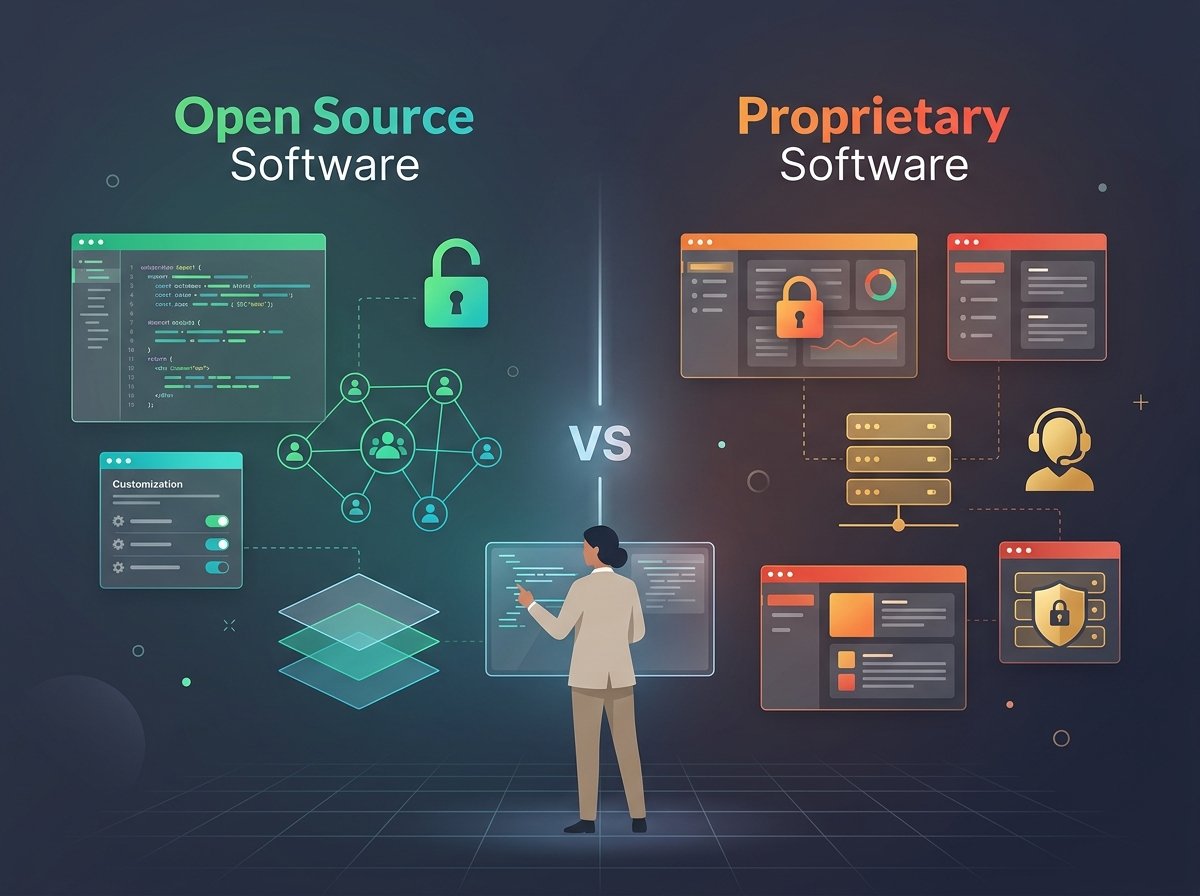
Table of Contents
What Is Open Source Software?
Open source software (OSS) is software whose source code is publicly available. Anyone can view, modify, and distribute it — subject to the terms of its license. Popular examples include Linux, WordPress, MySQL, and LibreOffice.
The key word here is “subject to its license.” Just because software is “free” doesn’t mean it’s free of legal obligations.
Common open source licenses include:
- GPL (General Public License) – Requires that any software built on it must also be open source
- MIT License – Very permissive; you can use it in proprietary products
- Apache License 2.0 – Permissive with patent protection clauses
If you use GPL-licensed software in your commercial product and don’t comply with its terms, you could face IP infringement claims. This is where understanding Copyright Registration and software IP protection becomes critical.
What Is Proprietary Software?
Proprietary software is software owned and controlled by a company or individual. You don’t get access to the source code. Instead, you purchase a license to use it. Examples include Microsoft Windows, Adobe Photoshop, SAP, and Tally.
The software vendor retains full intellectual property rights. You are simply a licensee, not an owner.
Open Source vs Proprietary Software – Key Comparison
1. 💰 Cost
Open Source: Generally free to download and use. However, implementation, customization, and support can be expensive.
Proprietary: Involves licensing fees, subscription costs, and per-user charges. Costs are predictable but ongoing.
Verdict: Open source wins on upfront cost. Proprietary wins on long-term support clarity.
2. 🔐 Intellectual Property Protection
This is where most businesses get caught off-guard when comparing open source vs proprietary software.
With open source, your IP risk comes from:
- Using a GPL-licensed library in your commercial product without disclosing your source code
- Violating license terms and being exposed to infringement claims
- Competitors seeing and copying your customizations (if you’re forced to publish them)
With proprietary software, your IP risk comes from:
- License violations (using more seats than purchased)
- Reverse engineering clauses
- Software audits from vendors like Microsoft or Oracle
If your business develops its own software product, whether built on open source or proprietary tools, it’s essential to protect your own IP through Patent Registration and Copyright Protection.
Pro Tip: If you’re building a SaaS product or application and embedding third-party libraries, have a legal expert audit your open source usage. Our team at Legal IP specializes in software IP protection for startups and enterprises.
3. 🔒 Security & Data Protection
Open Source: Code is visible to everyone — including hackers. However, it is also reviewed by thousands of developers globally, which often means vulnerabilities are spotted and patched faster.
Proprietary: Source code is hidden. Security depends entirely on the vendor’s internal practices. If a vendor is breached or goes out of business, you may be left exposed.
From a compliance standpoint, businesses handling sensitive data — especially in healthcare, finance, and e-commerce — must ensure their software stack meets standards like ISO 27001 (Information Security Management). Whether you use open source or proprietary software, getting your IT systems ISO 27001 certified through a recognized body like GACOICert is a strong signal to clients and regulators that you take data security seriously.
4. 🛠️ Customization & Control
Open Source: Full freedom to modify the code. Ideal for businesses with in-house development teams.
Proprietary: Limited customization. You must wait for the vendor to release updates or new features.
If your business model depends on a unique workflow or product, open source allows you to build that competitive advantage. However, the customized code you create may itself need software copyright registration to be legally protected.
5. ⚖️ Legal Compliance & Licensing Risk
This is one of the biggest hidden risks in the open source vs proprietary software debate.
Many businesses unknowingly integrate open source components into their products without reviewing license terms. This can result in:
- Forced disclosure of proprietary code (GPL copyleft trap)
- Cease and desist notices
- IP litigation
Proprietary software carries its own compliance risks. Vendors routinely conduct software license audits, and companies found using unlicensed copies can face massive penalties.
For Indian businesses, tax implications of software licensing — including GST on SaaS subscriptions and royalty payments — must also be considered. Visit LegalTax.in for expert guidance on the tax treatment of software licenses, royalties, and IT contracts under Indian law.
6. 🏆 Vendor Dependence vs. Community Support
Open Source: No vendor lock-in. If the community abandons a project, you may need to fork or migrate. Support is community-driven (forums, GitHub issues) unless you pay for enterprise support.
Proprietary: You depend on the vendor’s roadmap, pricing, and survival. If they increase prices or discontinue the product, you’re affected.
For long-term business planning, evaluating this risk is crucial — especially for mission-critical systems like your ERP, CRM, or billing software.
Open Source vs Proprietary Software – Quick Decision Table
| Factor | Open Source | Proprietary |
|---|---|---|
| Upfront Cost | ✅ Low/Free | ❌ Higher |
| IP Protection | ⚠️ Complex | ✅ Clearer |
| Customization | ✅ Full | ❌ Limited |
| Security | ✅ Community-reviewed | ⚠️ Vendor-dependent |
| Vendor Lock-in | ✅ None | ❌ High |
| Compliance Risk | ⚠️ License traps | ⚠️ Audit risk |
| Support | ⚠️ Community-based | ✅ Dedicated |
| ISO Certification Readiness | ✅ With proper controls | ✅ Generally easier |
Protect Your Business – Regardless of Which You Choose
Whether you go open source or proprietary, here’s what every business must do:
✅ 1. Register Your Software’s IP
If your business has developed custom software, apps, or code — register it. Copyright Registration protects your original work from being copied or misused. For truly novel inventions, consider Patent Filing.
✅ 2. Trademark Your Brand
Your software product’s name, logo, and brand identity deserve protection. Trademark Registration ensures no one else can legally use your brand identity in the market.
✅ 3. Get ISO 27001 Certified
Data security is non-negotiable. Whether you run open source or proprietary systems, achieving ISO 27001 certification through GACOICert demonstrates that your information security management is internationally compliant — a requirement for many enterprise clients, government contracts, and global tenders.
✅ 4. Handle Software Taxes Correctly
Software licensing has significant GST and income tax implications in India — especially for businesses using foreign SaaS tools or paying royalties abroad. Get proper compliance guidance at LegalTax.in to stay audit-ready.
✅ 5. Draft Solid IT Contracts
Whether you’re a software vendor, a buyer, or an IT service provider, well-drafted contracts protect all parties. Our Corporate Law and IP enforcement team at Legal IP can help you draft, review, and negotiate software agreements.
Final Verdict
There is no universal winner in the open source vs proprietary software debate. The right choice depends on your business size, technical capability, budget, and IP strategy.
What’s clear is this: whichever path you choose, your intellectual property, legal compliance, and data security must be protected.
Don’t leave your business exposed. Whether you need to register a trademark, protect your software copyright, get ISO certified, or understand software tax obligations — start with the right legal and compliance partner.
📞 Need help protecting your software IP? Contact Legal IP today for a free consultation — call +91 9555110005 or fill out our appointment form.

I’m Aman Arora aka Aman G — 10+ years in SEO and Digital Marketing, and I love getting results. I don’t just do SEO & Website Design; I build strategies that work. I’m a CA drop out, but what I enjoy most is helping entrepreneurs and NGOs reach their goals. For me, happy customers are the real reward.