Views: 3
Confused about Trademark Classes in India? Get the complete list of all 45 trademark classes, real examples, and expert tips to choose the right class for your business in 2026.
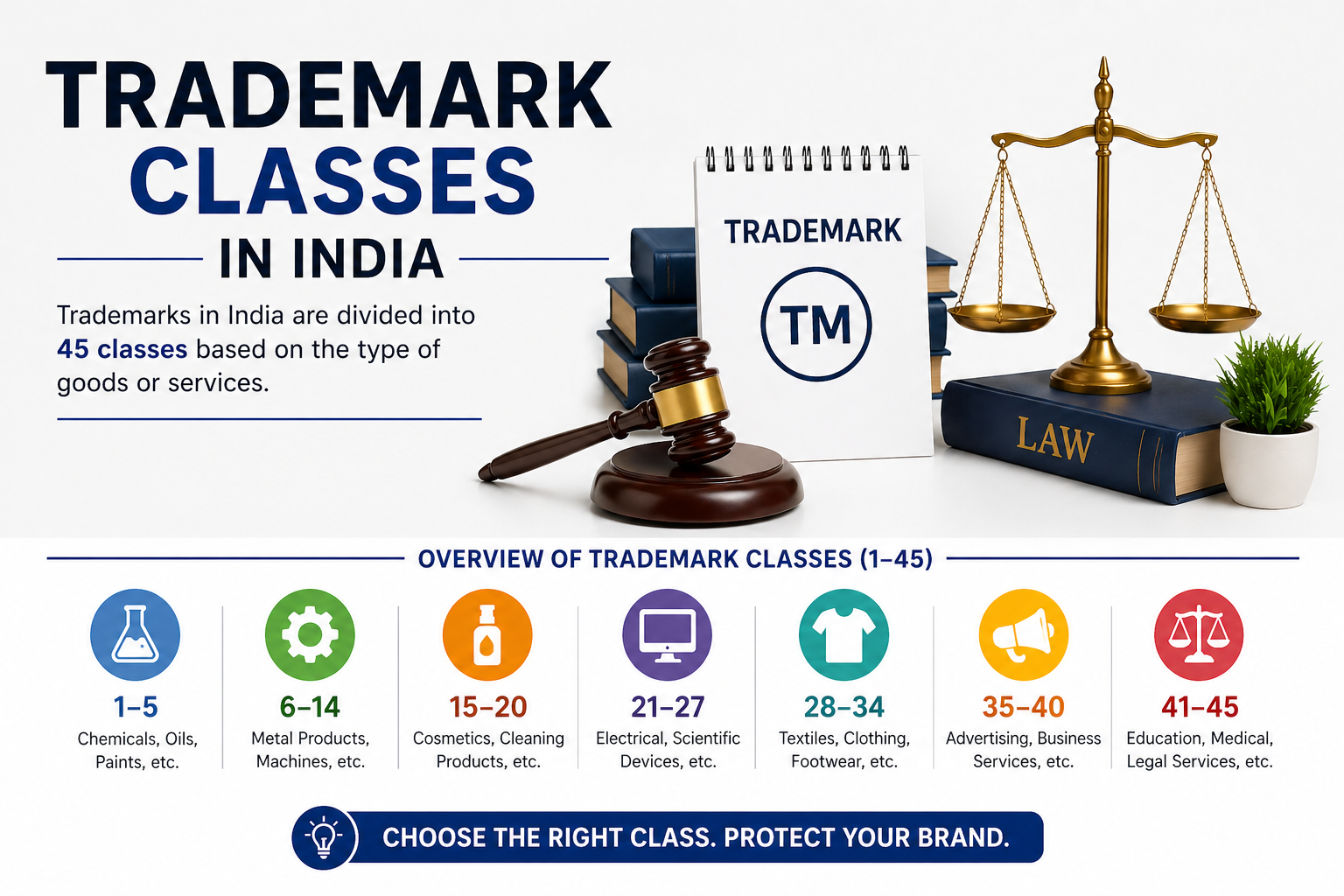
Table of Contents
- 1 Introduction
- 2 Why Trademark Classes in India Matter So Much
- 3 Trademark Classification in India System — How It Works
- 4 Complete List of 45 Trademark Classes in India
- 5 Quick Reference — Trademark Classes by Industry
- 6 Can You Apply Under Multiple Trademark Classes?
- 7 How to Choose the Right Trademark Class — 5 Simple Steps
- 8 Common Mistakes When Choosing Trademark Classes
- 9 FAQs — Trademark Classes in India
- 10 Conclusion
Introduction
Trademark Classes in India is one of the most confusing topics for first-time trademark applicants. You have decided to protect your brand — but then you hit a wall. Which class do you apply under? What if you pick the wrong one? Can you apply under multiple classes?
These are questions every business owner, startup founder, and entrepreneur asks when starting the trademark registration process.
India follows the Nice Classification System — an international system that divides all goods and services into 45 trademark classes. Classes 1 to 34 cover goods and Classes 35 to 45 cover services. Choosing the right trademark class is critical because your trademark protection only applies within the class you register under.
This complete guide covers all 45 trademark classes in India with real examples — so you can choose the right one for your business with confidence.
Why Trademark Classes in India Matter So Much
Before diving into the full list, understand why choosing the correct trademark class is so important:
Your protection is limited to your class — A trademark registered in Class 25 (clothing) does not protect you in Class 35 (retail services). A competitor can register the same name in a different class.
Wrong class means weak protection — If you register under the wrong class, your trademark may not protect your actual business activities.
Objections and rejections — Applying under the wrong class can lead to trademark objections and delays in registration.
Multi-class applications are possible — If your business operates across multiple industries, you can and should apply under multiple classes.
Trademark Classification in India System — How It Works
India adopted the Nice Classification system under the Trade Marks Act, 1999. It is maintained by the World Intellectual Property Organization (WIPO) and is used in over 150 countries worldwide.
The 45 classes are divided into two broad categories:
| Category | Classes | What They Cover |
|---|---|---|
| Goods | Class 1 to Class 34 | Physical products across all industries |
| Services | Class 35 to Class 45 | All types of service businesses |
Every time you file a trademark application in India using Form TM-A, you must specify which class or classes your trademark falls under.
Complete List of 45 Trademark Classes in India
GOODS — Class 1 to Class 34
Class 1 — Chemicals Industrial chemicals, scientific chemicals, chemical substances used in agriculture, photography, and manufacturing. Includes adhesives, fertilizers, and fire extinguishing compounds.
Examples: Chemical manufacturers, agricultural input companies, laboratory supply businesses
Class 2 — Paints and Coatings Paints, varnishes, lacquers, preservatives against rust and wood deterioration, colorants, dyes, inks for printing, and raw natural resins.
Examples: Paint brands, ink manufacturers, wood treatment companies
Class 3 — Cosmetics and Cleaning Products Non-medicated cosmetics, cleaning preparations, soaps, perfumes, essential oils, hair care products, toothpastes, and bleaching products.
Examples: Skincare brands, shampoo companies, perfume manufacturers, cleaning product brands
Popular Class: Most beauty and personal care brands register under Class 3.
Class 4 — Lubricants and Fuels Industrial oils and greases, lubricants, dust absorbing and wetting compositions, fuels including motor spirit, candles, and wicks.
Examples: Engine oil brands, fuel companies, industrial lubricant manufacturers
Class 5 — Pharmaceuticals Pharmaceutical and veterinary preparations, medical preparations, dietary supplements, baby food, plasters, bandages, and disinfectants.
Examples: Medicine brands, supplement companies, veterinary product manufacturers, baby food brands
Important: Healthcare and medicine businesses almost always need Class 5.
Class 6 — Metal Goods Common metals and their alloys, metal building materials, transportable buildings of metal, non-electric cables and wires of metal, hardware, pipes and tubes of metal, safes.
Examples: Steel manufacturers, hardware brands, metal construction companies
Class 7 — Machinery Machines and machine tools, motors and engines (except for land vehicles), machine coupling and transmission components, agricultural implements, incubators for eggs.
Examples: Industrial machinery brands, agricultural equipment manufacturers
Class 8 — Hand Tools Hand tools and implements, cutlery, side arms, razors, and hand-operated tools.
Examples: Tool brands, cutlery manufacturers, razor companies
Class 9 — Electronics and Technology Scientific, nautical, surveying, photographic, optical, weighing, measuring, signalling, checking, life-saving, teaching apparatus and instruments. Includes computers, software, mobile phones, batteries, and electrical apparatus.
Examples: Software companies, mobile phone brands, electronics manufacturers, app developers
Most Popular Class: Technology startups, software companies, and electronics brands almost universally register under Class 9.
Class 10 — Medical Devices Surgical, medical, dental, and veterinary apparatus and instruments, artificial limbs, eyes and teeth, orthopaedic articles, suture materials.
Examples: Medical device companies, dental equipment brands, prosthetics manufacturers
Class 11 — Lighting and Heating Apparatus Apparatus for lighting, heating, steam generating, cooking, refrigerating, drying, ventilating, water supply, and sanitary purposes.
Examples: Air conditioner brands, water purifier companies, LED lighting manufacturers, kitchen appliance brands
Class 12 — Vehicles Vehicles and conveyances for transportation by land, air, or water.
Examples: Automobile brands, bicycle manufacturers, electric vehicle companies
Class 13 — Firearms Firearms, ammunition and projectiles, explosives, fireworks.
Examples: Fireworks manufacturers, ammunition companies
Class 14 — Jewellery Precious metals and their alloys, jewellery, precious and semi-precious stones, horological and chronometric instruments.
Examples: Jewellery brands, watch manufacturers, precious stone dealers
Class 15 — Musical Instruments Musical instruments and accessories.
Examples: Guitar brands, piano manufacturers, music equipment companies
Class 16 — Paper and Printed Materials Paper and cardboard, printed matter, bookbinding material, photographs, stationery, adhesives for stationery, artists materials, typewriters, office requisites, instructional materials.
Examples: Publishing houses, stationery brands, printing companies, notebook manufacturers
Class 17 — Rubber and Plastics Rubber, gutta-percha, gum, asbestos, mica, and goods made from these materials in intermediate form for use in manufacture. Packing, stopping, and insulating materials, flexible pipes.
Examples: Rubber product manufacturers, plastic goods companies, insulation material brands
Class 18 — Leather Goods Leather and imitations of leather, animal skins and hides, luggage and carrying bags, umbrellas, walking sticks, whips, harness and saddlery.
Examples: Handbag brands, luggage companies, leather goods manufacturers, umbrella brands
Class 19 — Building Materials Building materials (non-metallic), non-metallic rigid pipes for building, asphalt, pitch, tar, transportable buildings of non-metallic materials, monuments of non-metallic materials.
Examples: Cement brands, tiles manufacturers, construction material companies
Class 20 — Furniture Furniture, mirrors, picture frames, containers of wood, cork, reed, cane, wicker, horn, bone, ivory, whalebone, shell, amber, mother-of-pearl, meerschaum, and substitutes for all these materials.
Examples: Furniture brands, interior decor companies, mirror manufacturers
Class 21 — Household Utensils Household or kitchen utensils and containers, cookware, glassware, porcelain and earthenware, combs and sponges, brushes, glass not worked.
Examples: Kitchenware brands, glassware companies, cookware manufacturers
Class 22 — Ropes and Textiles Ropes, string, nets, tents, awnings, tarpaulins, sails, sacks, padding and stuffing materials, raw fibrous textile materials.
Examples: Rope manufacturers, tent companies, textile raw material brands
Class 23 — Yarns and Threads Yarns and threads for textile use.
Examples: Textile yarn manufacturers, thread companies
Class 24 — Textiles and Fabrics Textiles and substitutes for textiles, household linen, curtains of textile or plastic.
Examples: Fabric brands, bed linen companies, curtain manufacturers
Class 25 — Clothing and Footwear Clothing, footwear, and headgear.
Examples: Fashion brands, shoe companies, sports apparel brands, clothing retailers
Most Popular Class: Every clothing, footwear, and fashion brand needs Class 25.
Class 26 — Lace and Embroidery Lace and embroidery, ribbons and braid, buttons, hooks and eyes, pins and needles, artificial flowers, hair decorations, false hair.
Examples: Embroidery brands, fashion accessories companies, button manufacturers
Class 27 — Floor Coverings Carpets, rugs, mats, matting, linoleum, and other materials for covering existing floors, wall hangings of non-textile materials.
Examples: Carpet brands, floor mat manufacturers, rug companies
Class 28 — Toys and Games Games, toys, sports and sporting goods, decorations for Christmas trees.
Examples: Toy brands, sports equipment companies, gaming product manufacturers
Class 29 — Food — Meat and Dairy Meat, fish, poultry, and game, meat extracts, preserved, frozen, dried and cooked fruits and vegetables, jellies, jams, compotes, eggs, milk and milk products, edible oils and fats.
Examples: Dairy brands, packaged food companies, frozen food manufacturers, edible oil brands
Class 30 — Food — Staples Coffee, tea, cocoa, sugar, rice, tapioca, sago, artificial coffee, flour and preparations made from cereals, bread, pastry and confectionery, condiments, spices, ice.
Examples: Tea brands, coffee companies, spice manufacturers, bakery brands, confectionery companies
Popular Class: Food and beverage companies frequently register under Class 30.
Class 31 — Agriculture and Fresh Produce Raw and unprocessed agricultural, aquacultural, horticultural and forestry products, live animals, fresh fruits and vegetables, seeds, natural plants and flowers, foodstuffs for animals, malt.
Examples: Seed companies, nurseries, fresh produce brands, animal feed manufacturers
Class 32 — Beer and Non-Alcoholic Beverages Beers, mineral and aerated waters and other non-alcoholic beverages, fruit beverages and juices, syrups and other non-alcoholic preparations for making beverages.
Examples: Soft drink brands, fruit juice companies, mineral water brands, beer manufacturers
Class 33 — Alcoholic Beverages Alcoholic beverages (except beers), wines, spirits, liqueurs.
Examples: Whisky brands, wine companies, rum manufacturers
Class 34 — Tobacco Tobacco and tobacco products, cigarettes, cigars, electronic cigarettes, smokers articles, matches.
Examples: Tobacco brands, cigarette manufacturers
SERVICES — Class 35 to Class 45
Class 35 — Advertising and Business Services Advertising, business management, business administration, office functions, retail and wholesale services, market research, business consultancy.
Examples: Digital marketing agencies, business consulting firms, retail chains, e-commerce platforms, HR companies
Most Popular Service Class: Almost every service business — from agencies to retailers — registers under Class 35.
Class 36 — Financial and Insurance Services Insurance, financial affairs, monetary affairs, real estate affairs, banking, investment services, money lending.
Examples: Banks, insurance companies, NBFCs, real estate agencies, investment firms, fintech startups
Class 37 — Construction and Repair Services Building construction, repair, installation services, cleaning services.
Examples: Construction companies, plumbing services, electrical contractors, cleaning service brands
Class 38 — Telecommunications Telecommunications, broadcasting, communication services, internet service providers, telephone services.
Examples: Telecom companies, internet service providers, broadcasting companies, OTT platforms
Class 39 — Transport and Travel Transport, packaging and storage of goods, travel arrangement, courier services, logistics.
Examples: Logistics companies, travel agencies, courier brands, cab aggregators, delivery services
Class 40 — Treatment of Materials Treatment of materials, recycling of waste and trash, air purification and treatment of water, printing services, food and drink preservation.
Examples: Recycling companies, water treatment plants, custom printing services
Class 41 — Education and Entertainment Education, providing of training, entertainment, sporting and cultural activities, publishing activities.
Examples: Schools, coaching institutes, edtech startups, entertainment companies, sports organizations, OTT content platforms
Popular Class: Every edtech startup, coaching center, and entertainment brand needs Class 41.
Class 42 — Technology and IT Services Scientific and technological services, research and design, industrial analysis and research services, design and development of computer hardware and software, IT services, cloud computing, SaaS.
Examples: Software development companies, IT service firms, SaaS startups, cybersecurity companies, app development agencies
Most Important for Tech: Every technology company, software brand, and IT firm must register under Class 42.
Class 43 — Food and Hospitality Services Services for providing food and drink, temporary accommodation, restaurants, cafes, hotels, catering services.
Examples: Restaurants, hotels, cafes, food delivery platforms, catering companies, cloud kitchens
Class 44 — Medical and Beauty Services Medical services, veterinary services, hygienic and beauty care for human beings or animals, agriculture, horticulture, and forestry services.
Examples: Hospitals, clinics, beauty salons, spa chains, veterinary clinics, ayurvedic wellness brands
Class 45 — Legal and Personal Services Legal services, security services for the protection of property and individuals, personal and social services rendered by others to meet the needs of individuals.
Examples: Law firms, security agencies, matrimonial services, funeral services, licensing services
Quick Reference — Trademark Classes by Industry
| Industry | Recommended Class |
|---|---|
| Software / App / IT | Class 9, Class 42 |
| Fashion / Clothing | Class 25 |
| Food & Beverages | Class 29, Class 30, Class 32 |
| Restaurant / Hotel | Class 43 |
| Healthcare / Pharma | Class 5, Class 44 |
| Education / EdTech | Class 41 |
| Jewellery | Class 14 |
| Cosmetics / Beauty | Class 3 |
| Financial Services | Class 36 |
| E-Commerce / Retail | Class 35 |
| Logistics / Transport | Class 39 |
| Real Estate | Class 36, Class 37 |
| Media / Entertainment | Class 38, Class 41 |
| Toys / Gaming | Class 28 |
| Agriculture | Class 1, Class 31 |
| Legal Services | Class 45 |
Can You Apply Under Multiple Trademark Classes?
Yes — absolutely. In fact, for many businesses, applying under multiple classes is strongly recommended.
Example 1 — A Fashion Brand A clothing brand that also sells perfume and handbags should register under Class 25 (clothing), Class 3 (cosmetics/perfume), and Class 18 (leather goods/handbags).
Example 2 — A Tech Startup A SaaS company should register under Class 9 (software) and Class 42 (IT services) for complete protection.
Example 3 — An EdTech Platform An online education platform should register under Class 41 (education services) and Class 9 (software/app).
Government Fee for Multi-Class Applications:
- Individual / Startup / MSME — ₹4,500 per class
- Company / LLP — ₹9,000 per class
How to Choose the Right Trademark Class — 5 Simple Steps
Step 1 — Define Your Core Business Activity Write down exactly what your business does — what products it sells or what services it provides.
Step 2 — Match With the Class Description Go through the 45 classes and find the one that most closely matches your core business activity.
Step 3 — Think About Future Business Plans If you plan to expand into new products or services, consider registering in those classes now to avoid reapplying later.
Step 4 — Check Existing Trademarks in That Class Before finalising your class, do a trademark search to check whether similar trademarks already exist in the same class.
Step 5 — Consult a Trademark Professional If you are unsure between two or more classes, a registered trademark agent can help you make the right decision and avoid costly mistakes.
Common Mistakes When Choosing Trademark Classes
Applying under only one class when multiple apply — This leaves significant gaps in your brand protection.
Choosing a class based on general industry — Always match the class to your specific goods or services, not your broad industry.
Ignoring service classes — Many product companies overlook registering under relevant service classes like Class 35 (retail) or Class 42 (tech services).
Not planning for future expansion — Registering only for current products can leave your future business lines unprotected.
FAQs — Trademark Classes in India
Q1. What happens if I choose the wrong trademark class? Your trademark protection will not cover your actual business. You may need to file a fresh application under the correct class, paying fees again.
Q2. Can two businesses have the same trademark name in different classes? Yes. The same trademark name can be registered by different entities in different classes as long as there is no likelihood of confusion.
Q3. Is there an extra fee for applying under multiple classes? Yes. The government fee is charged per class. For individuals and MSMEs it is ₹4,500 per class online.
Q4. Can I add more classes to my trademark after registration? No. You cannot add classes to an existing registration. You must file a fresh application for any additional classes.
Q5. Which is the most commonly used trademark class in India? Class 35 (advertising and business services) and Class 9 (electronics and software) are among the most commonly used classes in India.
Q6. Do I need a separate trademark application for each class? In India, you can file a single multi-class application covering multiple classes using Form TM-A. Each class is charged separately.
Conclusion
Understanding Trademark Classes in India is the foundation of a strong trademark registration strategy. Choosing the wrong class — or too few classes — can leave your brand dangerously unprotected.
Take the time to identify your core business activities, match them with the correct class from this complete list, and consider all the classes where your brand operates. When in doubt, always consult a trademark professional.
Your trademark is only as strong as the class it is registered under — choose wisely.
Protect your brand in the right class — register your trademark today.

I’m Aman Arora aka Aman G — 10+ years in SEO and Digital Marketing, and I love getting results. I don’t just do SEO & Website Design; I build strategies that work. I’m a CA drop out, but what I enjoy most is helping entrepreneurs and NGOs reach their goals. For me, happy customers are the real reward.